
Key points
Question
How is the presence of allied health professionals in HITH reflected in the available literature?
Findings
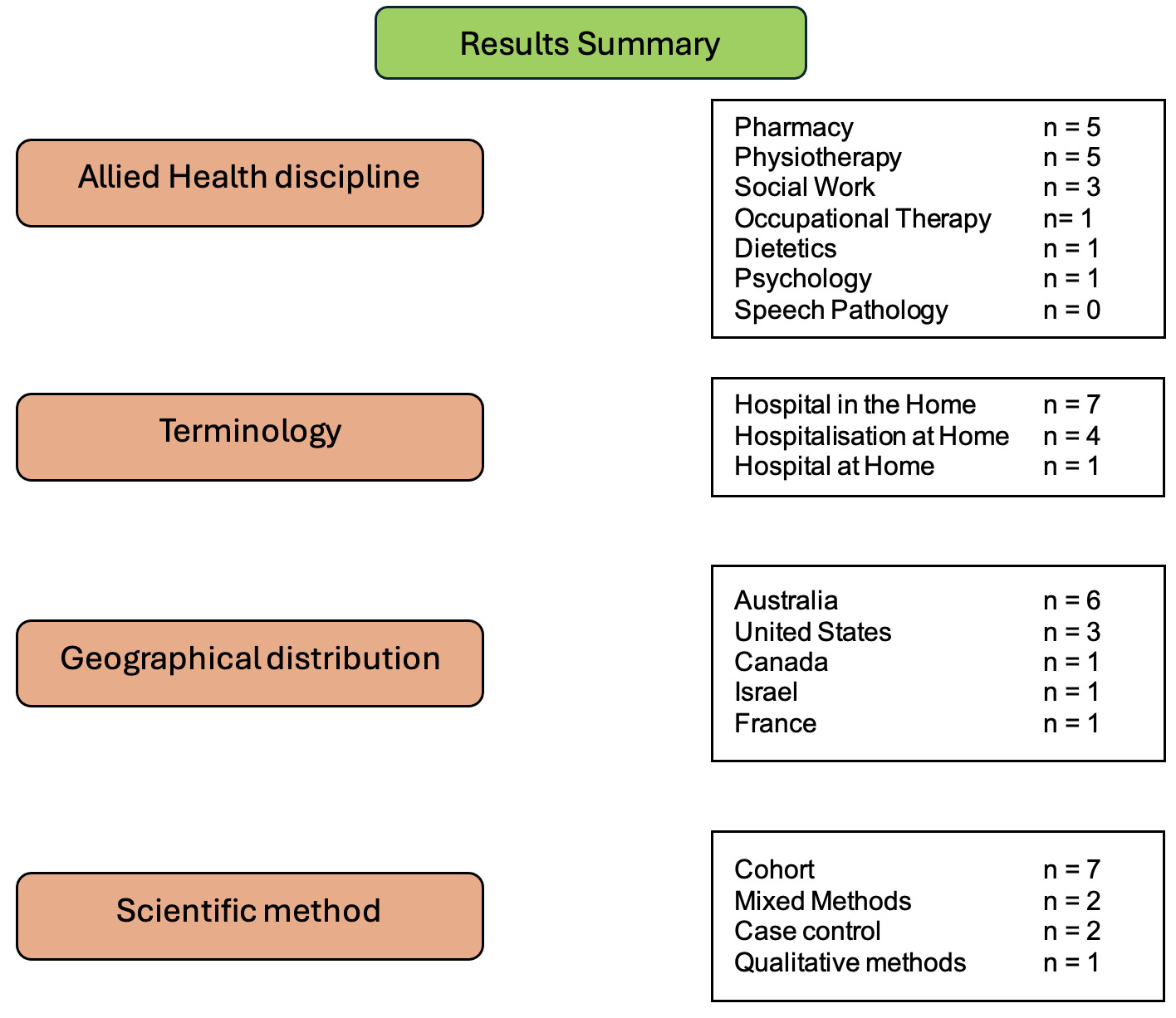
Within the 12 included studies, physiotherapy (n=5) and pharmacy (n=5) were the most commonly represented disciplines, with social work (n=3) appearing next most frequently. Occupational therapy, dietetics and psychology were noted once each across the literature, although the role of dietetics was not well defined or represented in the paper content. Speech Pathology was not referenced in any included articles.
Meaning
The representation of allied health professionals within the published research is limited, with the extent and scope of the role for each of the allied health disciplines reflected to differing degrees. Concrete conclusions regarding the role of allied health in HITH are not able to be drawn.
Keywords
Hospital in the Home (HITH); allied health; physiotherapy; pharmacy
Introduction
Growing health-economic and high bed occupancy pressures on the acute health sector has driven alternative and innovative solutions aiming to reduce the burden on at capacity hospitals with ballooning costs.1,2 Hospital in the Home (HITH) is a model that delivers inpatient-level care within the patient’s home, substituting bricks-and-mortar (BAM) hospital bed occupancy and the associated costs for eligible patients.3,4 Unsurprisingly, HITH models have rapidly expanded internationally throughout the past five years, with 44.7% of new services created within this period.5,6 HITH services aim to provide equivalent care to an acute hospital facility. Through HITH, health services expand bed capacity to offer high level care to a greater number of patients5 and improve overall patient flow and access to acute care services.
HITH services can be varied in their scope and interdisciplinary representation, with services including teams of doctors, nurses and allied health professionals, to varying degrees.7 For the purpose of this review, allied health disciplines will encompass physiotherapy, occupational therapy, speech pathology, social work, dietetics, pharmacy and psychology.
While allied health is considered integral to inpatient care, it is currently not well understood how allied health professionals are represented in HITH and the development of the allied health workforce within this model of care. When considering in-hospital care, treatment from a multidisciplinary team including allied health clinicians may be required, and according to the findings of a scoping review completed by Martin, can augment improvements in time-efficiency, quality of care, and positive stakeholder perceptions.8 Whilst it is unknown how allied health clinicians are represented on HITH services, they can comprise up to one third of the healthcare workforce9 and provide essential services during an inpatient admission. It is therefore critical to understand the extent to which allied health professionals contribute to the care of patients admitted to HITH. The importance that healthcare workers placed on allied health professionals’ contributions in HITH was emphasised in a case-study of HITH substituting a hospital admission for a hypothetical 14-year-old child with cystic fibrosis. When surveyed, almost all (84%) clinicians determined it would be unethical for this patient to be admitted to HITH without the inclusion of physiotherapy, as airway clearance is an essential aspect of inpatient care in this clinical context.10
With the known rapid expansion of HITH globally5 and the relative lack of evidence on allied health in HITH, investigation is required. Therefore, the primary aim of this review was to assess the reported prevalence in the available literature of allied health professionals within HITH services. Secondary to this, the authors aimed to outline the scope of any frequently described allied health professionals within these services.
Methods
This scoping review is reported in line with the PRISMA checklist11 and adheres to the foundations of the Joanna Briggs Institute scoping review methodology.12 Eligibility criteria are detailed below and were determined by consensus of two authors (CB/AB). The methodological approach included five stages:
-
Identify the research question
-
Identify relevant studies
-
Study selection
-
Charting the data
-
Collating, summarising and reporting the results12
The set research question is: How is the presence of allied health professionals in HITH reflected in the available literature?
Eligibility Criteria
Articles describing Hospital in the Home (or other terms for hospital in the home (e.g. hospital at home) as outlined in the search strategy (Appendix 1)) specifying the inclusion of allied health service provision in any HITH location e.g. home visit, videocall, clinic review, phone call.
Early Discharge, sub-acute and outpatient services e.g. rehabilitation in the home were excluded. These services were excluded as they represent a fundamentally different intervention scope, with the role of allied health in these services varying greatly from acute inpatient care. The authors anticipate sub-acute or early discharge model of care specific descriptions of allied health roles would be required in additional research.
Population
Allied health clinicians providing services on HITH.
Concept
Understand the prevalence, role and impact of allied health clinicians within HITH.
Context
Inpatient service models which are designed to substitute acute in-hospital level of care with a multidisciplinary team.
Sources
All sources will be considered, excluding grey literature, in the 10-year period between 30/04/2015 and 30/04/2025. Exclusions were non-English articles, studies without full text access, secondary literature and protocol papers.
Information Sources
Six database sources were used for searches and included Proquest, Scopus, Embase, CINAHL, Emcare and Medline.
Search Strategy
The search terms and strategy for each database are outlined in appendix 1. Studies that met final inclusion criteria after full-text review were included and reasons for exclusion of full text review articles were recorded.
Searches were conducted by a reviewer and imported into Covidence, a systematic review management tool that allows blinded screening, conflict resolution and data extraction.13 Once imported, study selection commenced via a two-step screening process, firstly a title and abstract screening, followed by full text review.
The title and abstract reviews were completed utilising a double review and consensus checking by two authors (CB/AB) for all retrieved articles. Full text review and final data extraction completed via double review and consensus checking by four authors (CB/AB/RF/IW). Conflicts were resolved through discussion between the two screeners, or by a third reviewer if consensus was not reached. The process was followed to reduce risk of bias, in the context of one author (CB) having previously published articles relevant to the scope of the review.
Data Extraction
A standardised data extraction template was developed by three reviewers (IW/AB/CB), tested on two included studies and refined prior to data extraction. During extraction, two blinded reviewers assessed each article against the established data extraction template (Appendix 2). This template accounted for a wide range of data sets, with the key points of interest being:
-
Location
-
Adult, Paediatric or a combined service
-
HITH service terminology
-
Allied health professions
-
Cohorts of patients
-
Study design/type
Data Synthesis
Data was tabulated with accompanying narrative summaries from two reviewers.
Content Analysis
The second phase of analysis was to complete a content analysis to deductively describe shared concepts found across the included literature.14 A content analysis method was selected, due to the anticipated heterogeneity of the literature and limitations of published data.14 The process included preparation of the information, organisation of the publications by discipline and theme and reporting of the findings below.14
Consent Statement
All data published within this review is referenced from publicly available literature, with no identifiable data included within this.
Ethics Approval
Ethics approval is not applicable to this review as all data was secondary and drawn from publicly available literature.
Results
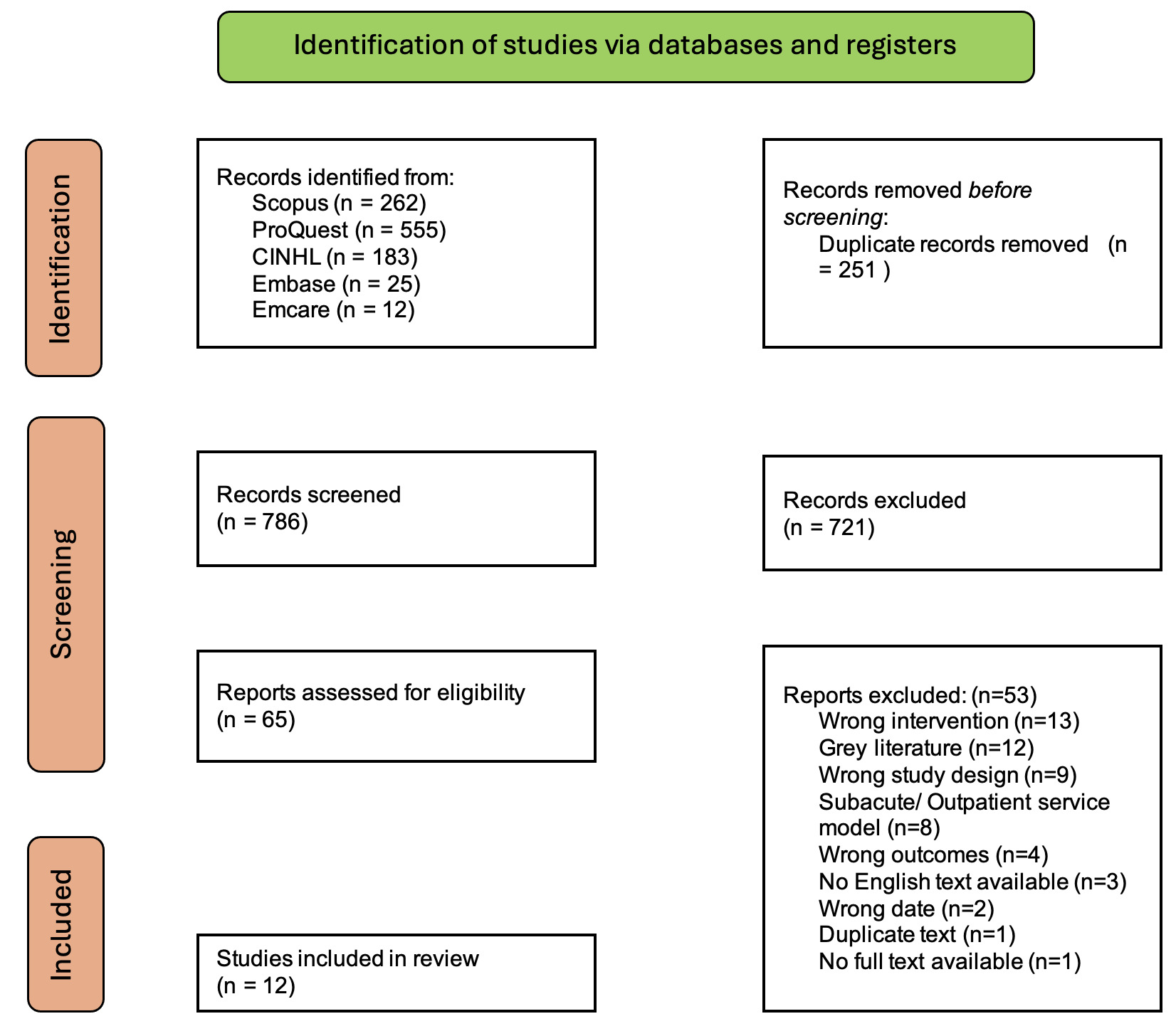
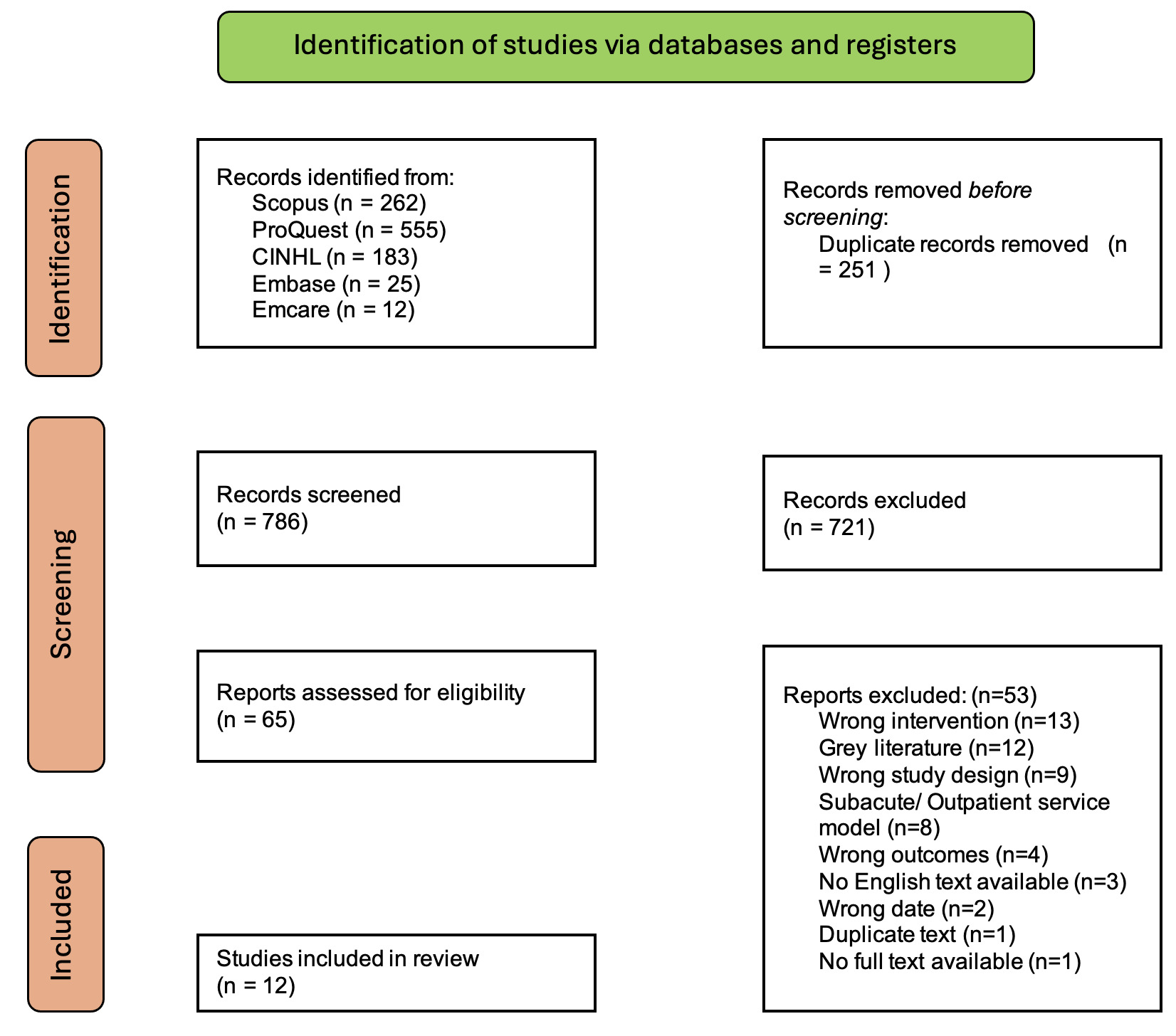
The search was conducted on 30 April 2025 and yielded 1037 references, with one article subsequently added from search notification screening. Duplicates were removed both electronically (n=249) and manually (n=2). Titles and abstracts for the remaining sources (n=786) were screened; full text review for each of the remaining abstracts (n=65) was completed, with exclusion reason provided for each source removed from final review (n=53). The remaining articles (n=12) were then assessed and data extraction was completed (Figure 1).
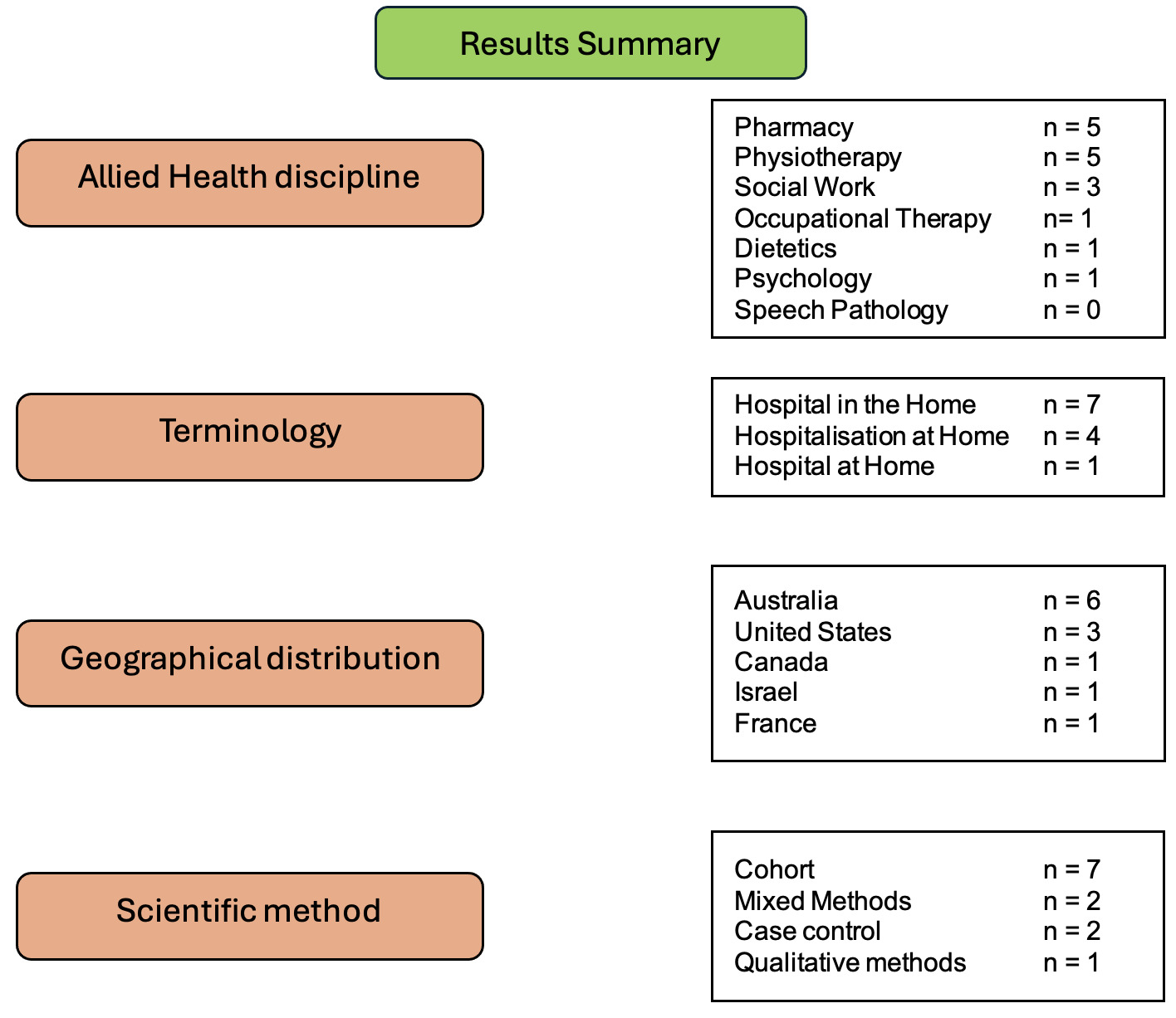
Within the 12 included studies, physiotherapy (n=5) and pharmacy (n=5) were the most commonly represented disciplines, with social work (n=3) appearing next most frequently. Occupational therapy, dietetics and psychology were noted once each across the literature, although the role of dietetics was not well defined or represented in the paper content (Table 1). Speech pathology was not referenced in any included articles.
Geographically, six studies were from Australia, three from the United States (US) and one each from Canada, Israel and France. Services described in the included studies used a variety of terminology, with Hospital in the Home (n=7), Hospitalisation at Home (n=4) and Hospital at Home (n=1) being the three used terms. Henceforth we will use the term HITH.
Within the articles of this review, there were Cohort (n=7), Case control (n=2), Mixed Methods (n=2) and Qualitative method (n=1) studies.
None of the 12 publications completed randomisation of participants and blinding of assessors or clinicians was not noted in any of the publications. One third (n=4) of the publications completed statistical evaluation, reporting either p value or standard deviations in analysis of results.15–18
Content Analysis
1. Pharmacy
Two of the pharmacy papers shared a common theme, detailing the increase in medication safety by the inclusion of a pharmacy service in HITH models.16,20 This was reported by a retrospective cohort study conducted in Australia16 outlining a review of two equivalent sites providing a mental health HITH (MH-HITH) service. One site had an integrated clinical pharmacist; the other had no specific pharmacy services. Medication safety key performance indicators were the primary outcomes assessed, with the audit finding that mmedication reconciliation on admission (87% vs 29%, p <0.001), daily medication chart review (99% vs 0%, p = <0.001) and the listing of adverse drug reactions (97% vs 58%, p = <0.001) were all demonstrated to be significantly more accurate at the site with a clinical pharmacist. This finding was further supported by the significant reduction in errors through medication reconciliation reported by a French team led by Billotte,20 with the researchers finding that 64% of patients admitted to the HITH service had unintentional discrepancies with their medications. These discrepancies were corrected for patients admitted to the service. In addition to improving safety, the expertise of pharmacists was shown to be highly valued within HITH teams, with one study16 reporting over 96% of recommendations from the clinical pharmacist were accepted and put into practice by the treating team. In another cohort, the authors reported that the overwhelming majority of their patients received input, demonstrating the pivotal role the pharmacists played in the success of the programs.26 Pharmacists have been able to demonstrate the strength of their role within HITH teams, with comparatively high research representation, totalling nearly half of all literature meeting the scope of this review (n=5).
2. Physiotherapy
Physiotherapy was represented in five15,17,18,23,25 publications within this review, with 60% of these articles analysing a paediatric respiratory cohort. In this cohort, patients completed chest physiotherapy airway clearance techniques once or twice daily with an experienced physiotherapist,15,17,18 an essential element of acute inpatient care for these patients. Both O’Rourke et al and Hough and Christensen17,18 completed cohort studies to compare the outcomes for children admitted to Australian paediatric bricks-and-mortar hospitals and their associated HITH services. In both instances, authors found no statistical differences in outcome when comparing length of stay (p = 0.051), lung function results (p = 0.067) and weight (p = 0.718) in one instance17 and duration of treatment (p = 0.53), adverse events (p = 0.39), symptom resolution (p = 0.85) and time to next admission (p = 0.52) in another.18 Both studies identified an equivalence in clinical treatment between the two treatment locations, suggesting HITH to be a safe and effective treatment course in this cohort.
Benz et al15 completed a retrospective case control study in paediatric patients with respiratory disease. The study compared the effectiveness and safety of a hybrid model of Telehealth and in-person physiotherapy care, in comparison to an in-person visit only admission on HITH.15 No identifiable difference was noted, indicating HITH with telehealth delivered services are feasible and effective within a paediatric respiratory cohort.
Physiotherapists were also demonstrated to deliver a meaningful service alongside occupational therapy colleagues to adult oncology patients,23 improving access to care at home and avoiding unnecessary in-hospital admissions.
3. Social Work
Social workers are described by Ross and colleagues as instrumental in considering all social determinants of health and identifying causes and recommending solutions impacting a successful HITH episode of care.25 In the broad and complex nature of HITH, the benefits of social work inclusion in smoothing transitions and linking into services to reduce rates of readmission were clearly outlined by the US team led by Ross.25 An Israeli study also found a link between reduced readmission rates through their home hospitalization service with improved follow-up and treatment by social and rehabilitation services, highlighting the beneficial work conducted by social work in a mental health care context.19 While preliminary descriptions of social work on HITH exist, questions regarding the role of social workers remain and gaps in literature are described by the authors.
4. Additional Allied Health Disciplines
Dietetics,19 occupational therapy23 and psychology19 were mentioned in one article each, with occupational therapy and psychology roles described by the authors. Dietetics were noted as team members within one study, however no description of the role or contribution was noted in this publication. No mention was recorded for speech pathology throughout the 12 papers.
Discussion
The primary objective of this scoping review was to assess the reported prevalence in the available literature of allied health professionals within HITH services.
As previously described above, published evidence evaluating the work of allied health professionals within the clinical context of HITH is limited. Despite the number of allied health clinicians working within acute healthcare settings, published research in allied health as a whole remains underdeveloped in many countries,27 with the outcome of this review indicating that this lack of publication extends to HITH. It is not possible to stipulate if the representation within the literature is reflective of the clinical landscape given the low number of papers within this review, however this helps to highlight the importance of growing allied health research capacity, which is being explored by researchers globally.27 An example of this is within a report from France, noting that “strengthening the field of … allied health research is essential to extend the skills of … allied health workers and to improve the quality of patient care”.27 As demonstrated by the review findings, this is clearly applicable within HITH allied health teams, with rapidly expanding or newly developing services6 creating excellent opportunities for clinicians to formulate evidence. Translation of the clinical work in HITH into research evaluation and outputs appears to be limited by several factors, including the lack of funding for research, which is reflected by the publications within this review, with only two of the 12 receiving any form of supportive funding and the remaining 10 completing their research presumedly unfunded alongside their clinical work. Another factor potentially limiting allied health contributions to published research is prioritisation. When HITH program leaders, physicians and researchers28 working in the area were asked to identify research priorities in HITH, nine28 were put forth without the inclusion or mention of allied health.
In a recent systematic review conducted by an Australian team exploring the barriers, benefits and enablers of HITH in an Australian context,29 none of the reviewed literature made note of allied health in the context of being either a barrier or enabler for the service. Within the wider landscape of published literature related to HITH, the lack of inclusion appears consistent with the overall lack of evidence for allied health, and is notable comparative to both medical and nursing.7,30–32
The authors do not discount that a potential cause for low publication numbers is the different needs of patients within HITH services, including the need for allied health. In some HITH services, the clinical cohort may have less reliance on allied health clinicians, with their transfer from traditional BAM services occurring after the completion of their allied health input, or that patients are only accepted when not requiring allied health input during their acute admission. Allied health representation within HITH services could not be clearly defined or compared to BAM services, so it is not possible to say that the lack of publications is solely due to low research outputs and could potentially be reflective of lower allied health representation in HITH service models when comparing to traditional BAM inpatient care.
The representation of allied health professionals in HITH within the published research is limited, with the existing work heavily weighted towards physiotherapy and pharmacy, both in terms of representation within teams and when considering primary author affiliations. Whilst dietetics, occupational therapy and psychology were each represented, there is insufficient information to make any informed statement on the scope of the role in HITH for these clinicians. There was no mention or publication from speech pathology. The results of this review highlight a significant gap in available evidence and knowledge around current clinical practice for the allied health workforce within HITH. With continued support, further research could be conducted to reflect and further understand the clinical contributions of allied health professionals within HITH teams.
Limitations
A number of limitations for this review were identified, including; the selection of a scoping review methodology, which included a limited analysis of publication quality, rather than a more rigorous process such as a systematic review or meta-analysis. This decision was made in consideration for the need to map an unknown scope of literature and the anticipated heterogeneity of the included articles. Secondary to this, it was not possible to synthesise and make an analytical assessment of the published data, due to the varied study design and evidence quality presented. In response the authors provided descriptive reporting on available evidence and summarised themes where possible. The ability to translate findings to clinical practice is limited by evidence quality and a low number of published articles, however the authors anticipate the scoping review summarising current available literature provides a clear need for further research and may encourage increased and higher quality publications in this identified gap.
This scoping review was not registered and did not have a protocol. Due to limited precedence in current published literature and the expectation of limited evidence, it was deemed not feasible to establish a protocol due to anticipated amendments required during the review.
Future Research
Whilst this scoping review was able to identify some current evidence to support the role of allied health professionals in HITH, more investment is required within this space. Robust, high-quality research is lacking in this area, with funded research also limited. The lack of publications specific to some disciplines, including occupational therapy, dietetics, psychology and speech pathology is also of note. This review also identifies the need for further understanding of the specific scope for allied health within HITH.
Conclusion
This review has successfully reported on the prevalence of allied health professionals within HITH services, as reflected in the available literature. The extent and scope of the role for each of the allied health disciplines is reflected to differing degrees, with concrete conclusions regarding the role of allied health in HITH unable to be drawn. This presents an opportunity for allied health professionals and HITH clinical teams to participate in and publish research aimed at improving our understanding of the roles and impact of allied health professionals within HITH.
Acknowledgements
We would like to acknowledge Dr Pamela Laird for her evaluation and guidance during the writing process and to acknowledge Rachel Resuggan for her support of allied health research at Perth Children’s Hospital.
Funding
This review was conducted without the acquisition of funding however all authors work substantively within HITH services in public health in Australia.
Data Sharing
No new data was generated during the course of this review. The data-extraction template used by the authors has been provided within the appendices of this review.
Conflict of Interest
No conflict of interest was identified.
Author Contributions
Conceptualization: CB, AB, RF
Formal Analysis: IW, CB, AB, RF
Methodology: IW, CB, AB
Writing - Original Draft: IW
Writing – Review and Editing: IW, CB
Corresponding Author
Isaac Wedderburn, Isaac.wedderburn@health.wa.gov.au
Physiotherapy Department, Perth Children’s Hospital, 15 Hospital Avenue, Nedlands, Perth, WA, 6009