
Key Points
Question
What is the safety, efficacy, and patient experience of continuous IV antibiotic infusion therapy delivered via Peripheral Intravenous Cannula (PIVC) in Australian HITH services?
Findings
We observed a 9.98% device failure rate, markedly lower than previously reported general PIVC failure rates of 36-69%, with no PIVC-related infections and high patient satisfaction. Results supported clinically indicated rather than routine time-based PIVC replacement.
Meaning
These findings provide evidence to reconsider the current Australian guideline position that continuous IV antibiotic infusions for patients at home, should only be infused via a central venous access device, showing that continuous antibiotic infusions via PIVC (when used for short duration), may be safe in well-resourced HITH settings.
Introduction
Hospital in the Home (HITH) offers a safe and cost-effective alternative to inpatient care, with equivalent or superior clinical outcomes.1–4 Continuous intravenous (IV) antibiotic therapy is commonly delivered in HITH for conditions such as cellulitis, pneumonia and urinary tract infections,5,6 using venous access devices, including peripheral intravenous cannulas (PIVCs), midline catheters or peripherally inserted central catheters (PICCs).7–9
In the home-care setting, continuous antibiotic infusion via PIVC offers practical advantages, including once-daily nursing, ease of insertion, lower invasiveness (superficial versus deep vein), with reduced risk of central venous access device (CVAD)-related complications and costs.10 PIVC infusions are common in hospitals, and patients may identify subjective symptoms more rapidly than routine staff assessment.11 Longer-length PIVC may reduce phlebitis and dislodgment risk, and enhanced supervision (e.g. specialised nurses and virtual care technology) may further improve monitoring and safety.12,13
Some Australian HITH services routinely use PIVCs for 12-24 hour antibiotic infusions, when short treatment duration is anticipated (typically < 7 days, up to 14 days), with single-centre studies supporting efficacy, safety, and patient satisfaction.5,14,15 Current Australian guidelines, however, state that PIVCs are “generally not recommended for continuous infusion” due to risks of device failure and extravasation.16 This recommendation is largely based on reported general PIVC complication rates of up to 69%.17 More recent data shows a substantially lower complication rate of 36.4%, suggesting improved PIVC care practice.18
Many guidelines also recommend routine PIVC replacement every 72 hours,16,19 with clinically indicated PIVC replacement restricted to facilities that meet specific safety, surveillance and documentation standards.20 Evidence from Cochrane19 and an Australian HITH randomised controlled trial21 indicates no difference in complication rates between routine and clinically indicated replacement, with reduced costs and less patient discomfort for the latter.
Despite known use, evidence evaluating continuous antibiotic infusion via PIVC in HITH remains limited. No multicentre Australian study has evaluated PIVC failure rates or patient experience in this context, hence there is a need for data to inform practice and guideline alignment.
This study prospectively evaluates safety and efficacy of continuous antibiotic infusion via PIVC across four Australian HITH services. We hypothesised that PIVC failure rate would be low and patient satisfaction high, comparable to or better than reported outcomes for published PICC and general PIVC use. The primary aim was to determine overall PIVC failure rate and reasons for removal. The secondary aims were to 1) measure patient satisfaction, 2) compare failure rates with published benchmarks, and 3) identify independent predictors of PIVC failure, including the association between Visual Infusion Phlebitis (VIP) score (Appendix A) and PIVC removal.
Methods
Study design
Multicentre, prospective observational cohort study evaluating safety, efficacy and patient satisfaction of continuous 12-24 hour IV antibiotic infusions administered via PIVC in Australian HITH services. Ethics approval was obtained from the ACT Health Human Research Ethics Committee [2024.LRE.00240, 2024/ETH02165] and study was registered with the Australian New Zealand Clinical Trials Registry [ACTRN12625000384459]. Written informed consent was obtained from all participants. Recruitment and data collection occurred March-September 2025. Consecutive patient enrolment and standardised data collection minimised selection and observer bias.
Hospital setting
The study was conducted across HITH services at four public, principal referral and teaching hospitals: Bankstown-Lidcombe (NSW), Canberra (ACT), Townsville University (QLD), and Rockhampton (QLD). Medical governance was provided by hospital-employed clinicians at all sites. Nursing delivery models varied: Canberra and Rockhampton employed hospital-based multidisciplinary teams; Townsville University and Bankstown-Lidcombe partner with private or community nursing services, respectively. At Bankstown-Lidcombe, PIVC management is hospital-based; other sites manage PIVCs in the home or hospital. At all sites, PIVC insertion is predominantly landmark-guided. Canberra Hospital HITH operates a dedicated Intravenous Access Team (IVAT) with specialist nurses who insert PIVCs under aseptic technique and ultrasound guidance, using long PIVCs (45-64mm vs 19-32mm short PIVCs), predominantly for patients with difficult venous access. All sites have pharmacist involvement in infusor management; Canberra and Rockhampton have dedicated HITH clinical pharmacists.
Antibiotic infusors were sourced from a commercial, sterile manufacturing facility (Baxter Healthcare or Slade Health) or prepared on-site by trained nurses or pharmacists. All compounded infusors were prepared using validated protocols governing sterility, dilution, solvent selection, reservoir volume, and drug stability.22 Antibiotic selection for continuous elastomeric infusion was guided by Australian Therapeutic Guidelines (ATG): Ambulatory Antimicrobial Therapy16 and the Baxter Compounding App,22 ensuring only antibiotics with established stability, thermal tolerance, and compatibility for elastomeric delivery were used.
Participants and Recruitment
Eligible patients were aged ≥18 years and anticipated to require only short-term (<14 days) IV antibiotic therapy, with an antibiotic appropriate for continuous infusion via PIVC. Exclusion criteria were: use of a CVAD or midline catheter, short infusions (<12 hours) or intermittent bolus dosing. Patients receiving vancomycin were excluded due to high phlebitis risk.17,22,23 Flucloxacillin is generally not recommended for continuous infusion via PIVC due to phlebitis risk,22 however, two patients receiving flucloxacillin were included due to initial clinical necessity. Daily admission lists were screened by HITH staff; eligible patients were approached for enrolment and consent before data collection.
Sample Size
A minimum sample size of 300 participants was calculated to provide precise estimates of failure rates using Clopper–Pearson exact 95% confidence intervals (Appendix B). Assuming a 10% PIVC failure rate, the expected confidence interval was reduced from 12.7% (n=100) to 7.2% (n=300). Recruitment ceased once the target sample size was reached.
Data Collection
Prospective data collection included patient demographics, comorbidities, treatment indications, antibiotic regimens, and PIVC insertion characteristics (inserter role, anatomical site, gauge, length, dressing type). Daily PIVC assessments by trained HITH nurses included the VIP score24 (Appendix A) until PIVC removal, with reason for removal recorded. Upon completion of IV therapy, patients were invited to complete an anonymous patient satisfaction survey (Appendix C).
Clinical Outcomes
The primary outcome was overall PIVC failure, defined as unplanned PIVC removal due to complications (infiltration, dislodgement, phlebitis, pain, thrombus, leaking, occlusion, local infection, or bacteraemia). The PIVC failure rate was unplanned removals divided by total PIVC insertions. Planned removal was at treatment completion or electively without complication.
All sites followed routine 72-hour PIVC replacement for short PIVCs, with extension permitted at clinical discretion. Bankstown-Lidcombe directed early removal at VIP score ≥1; other sites used VIP score ≥ 2. All sites removed PIVC early if clinical complications were evident23; longer aseptically inserted PIVCs could remain until clinically indicated removal.
Secondary outcomes included patient satisfaction, type-specific complication rates, predictors of PIVC failure, PIVC dwell time and adherence to replacement guideline recommendations.16
Patient Satisfaction Survey Analysis
At treatment completion, a survey containing three 11-point Likert items and five binary (Yes/No) questions assessed patient satisfaction. Numerical rating scale responses (0-10) and categorical responses (as proportions with exact binomial 95% Confidence Intervals (CIs) were reported. Free-text comments were analysed thematically.
Statistical Analysis
Continuous variables were reported as mean ± standard deviation (SD) or median (interquartile range; IQR), and categorical variables as counts and percentages. Between-site comparisons used Pearson’s chi-squared or Fisher’s exact tests for categorical variables, and Kruskal–Wallis or Wilcoxon rank-sum tests for continuous variables. PIVC failure rates were expressed as proportions with exact binomial 95% CIs; failure incidence was calculated per 1,000 catheter-days with Poisson 95% CIs. VIP score associations with failure were examined by logistic regression (odds ratios, ORs).
Predictors of PIVC failure were examined using Cox proportional hazards models. Variables with p≤0.20 in univariate analysis were included in the multivariable model: Charlson Comorbidity Index (CCI), hospital site, anatomical insertion site, inserter role, PIVC length category (Short: 19–32 mm vs. Long: 45–64 mm), and antibiotic type (grouped as cefazolin [reference], piperacillin-tazobactam, and other). Results were reported as hazard ratios (HRs) with 95% CIs. Quasi-Poisson regression compared failure incidence among failed PIVCs (excluding PIVCS routinely removed at 72 hours) between guideline-recommended (≤3 days) and extended (>3 days) dwell and between total treatment time (≤7 vs. >7 days), using catheter days as an offset to estimate Incidence Rate Ratios (IRR). The unit of analysis was the individual PIVC; each was treated as an independent observation from insertion. Patients with more than one eligible HITH admission during the study period could contribute multiple episodes. All analyses were conducted in R (version 4.3.2; R Core Team, Vienna, Austria); two-sided p-value <0.05 was considered statistically significant.
Height and BMI were unavailable for Rockhampton participants (n=74) and were excluded from multivariable analyses. All other missing data were <1.2% and were not imputed.25
Results
Study Population
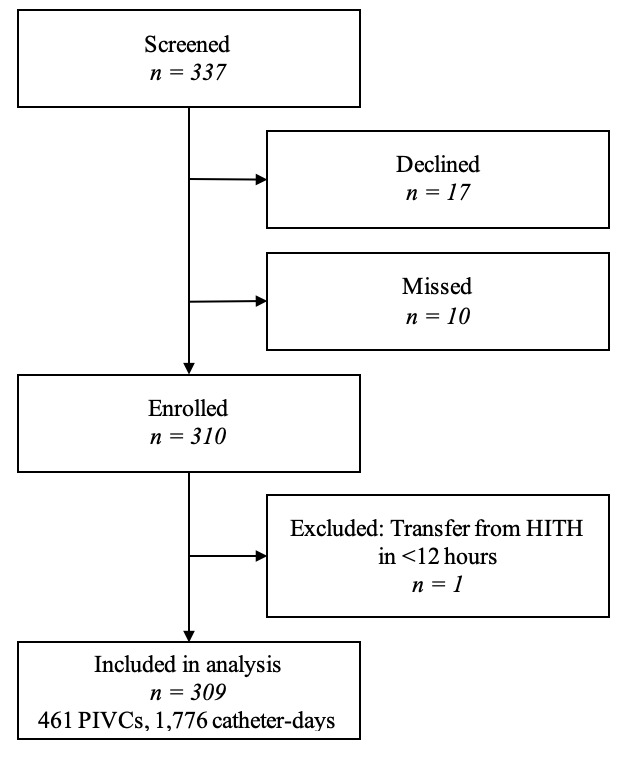
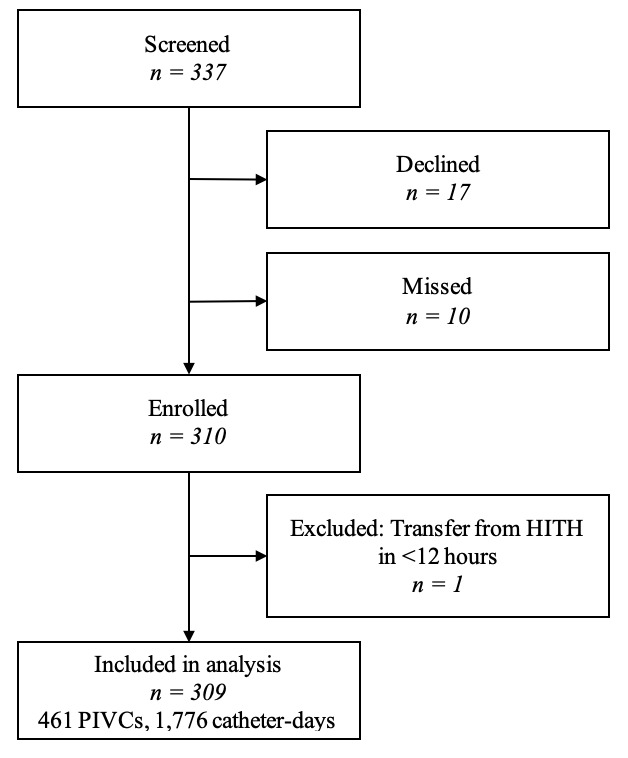
337 patients were screened across four HITH services. Seventeen declined, and 10 were missed due to operational constraints (e.g. after-hours presentations), leaving 310 enrolled. One patient was excluded due to transfer from HITH within 12 hours, leaving 309 patients included for analysis (Figure 1), contributing 461 PIVCs over 1,776 catheter-days. Recruitment differed significantly by site (p=0.004): Canberra (33.7%, n=104), Rockhampton (23.9%, n=74), Bankstown-Lidcombe (22.3%, n=69) and Townsville (20.1%, n=62).
Patient Demographics and Treatment Characteristics
Mean patient age was 60 years (SD 17.80), and 62.78% were male (n=194). The median CCI was 1 (IQR 0-3) (Table 1). The most common treatment indication was cellulitis (67.96%, n=210), followed by bone and joint infections (8.74%, n=27). Cefazolin was most frequently prescribed (78.64%, n=243). The median total treatment time, equivalent to the HITH admission length of stay, was 5 days (IQR 3-7). All patients were discharged following clinical improvement; no readmissions due to PIVC complications were identified.
PIVC Characteristics
PIVC insertors included regular nurses (51.20%, n=235), doctors (26.80%, n=123) and IVAT nurses (16.34%, n=75), with 5.66% unclassified. Long PIVCs accounted for 15.47% (70/461). Median PIVC dwell time was 4 days (IQR 3-5) (Table S1). Most patients (94.50%, n=292) required only 1-2 PIVCs. The majority of ultrasound-guided insertions occurred at Canberra Hospital (78/100, 78%), reflecting ready access to the dedicated IVAT (Table S1). Insertion technique was not a significant predictor of PIVC failure (HR 0.61, 95% CI 0.29–1.29, p=0.195) (Table S5).
Primary Outcomes
PIVC failure
The overall PIVC failure rate was 9.98% (46/461 PIVCs, 95% CI 7.40-13.09%), corresponding to an incidence of 25.90 failures per 1,000 catheter-days. Despite significant differences in recruitment across sites (p=0.004), site was not a significant predictor of PIVC failure in either univariate or multivariable analysis (Tables S5, S6). The most common causes of PIVC failure were dislodgement (2.82%), phlebitis (2.39%) and pain (2.39%). No PIVC-related bacteraemia or local infection occurred (Table 2).
All 46 PIVC failures were minor and self-limiting. Mechanical complications (dislodgement, occlusion, leaking, infiltration; n=28) were more common than inflammatory complications (phlebitis, pain; n=22). No failure resulted in hospital readmission, CVAD escalation, or significant treatment interruption. The single superficial thrombus resolved without sequelae.
Secondary Outcomes
Patient Satisfaction
249 surveys were completed (80.6% response rate). Overall patient satisfaction was 9.6/10 (mean, SD 1.0) (Table S2). Most patients felt safe receiving treatment at home (98.3%) and would recommend HITH PIVC antibiotic infusion to others (99.1%) (Table S3). Satisfaction did not differ between patients with (mean 9.7, SD 0.73) and without (mean 9.6, SD 0.75; p=0.65) PIVC failure. Few patients contacted HITH regarding device concerns (8.2%), and 3.1% of respondents would have preferred hospital admission (Table S3). Of 425 free-text comments, 82.1% were positive, most addressing service quality (29.9%) and comfort and convenience (19.059%) (Table S4).
Predictors of PIVC Failure
Higher final VIP scores were associated with increased likelihood of PIVC removal; each 1-point VIP increase raised the odds of failure (OR 1.89; 95% CI 1.06–3.18; p=0.018).
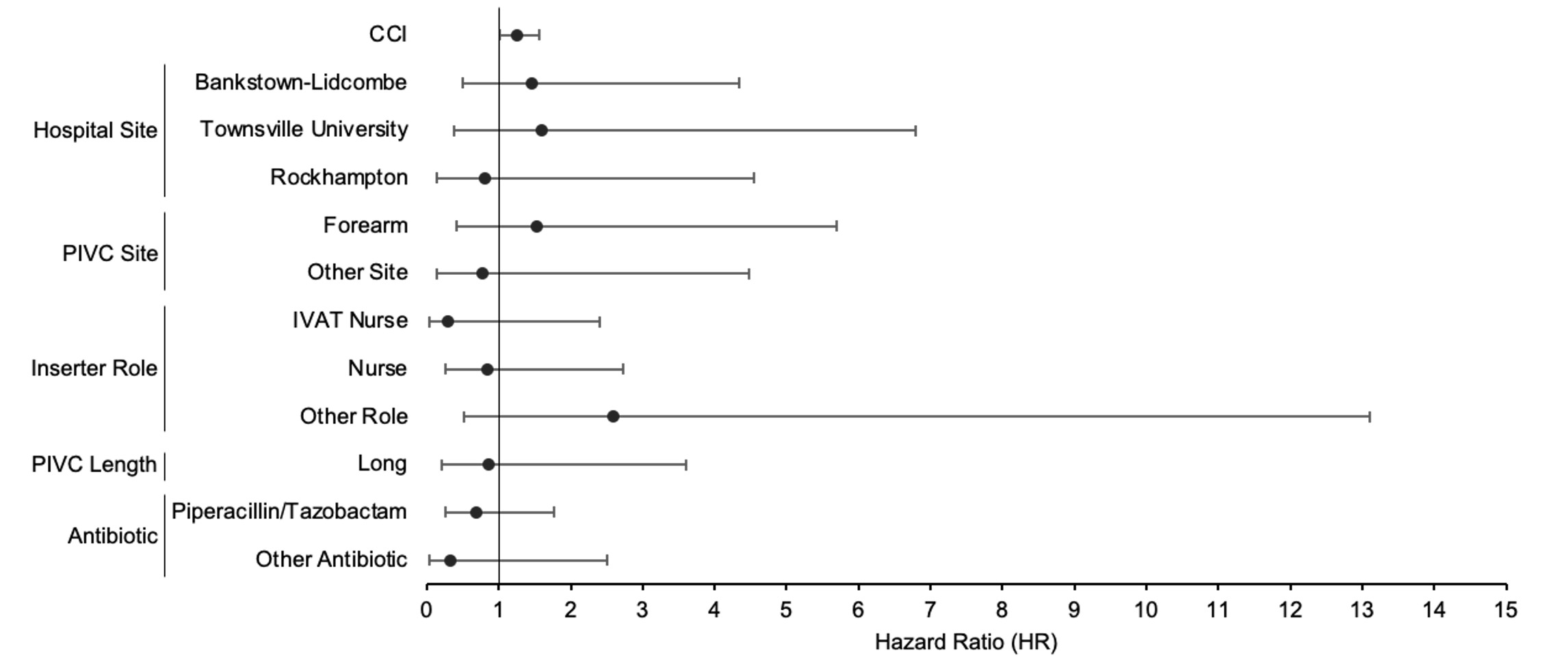
In univariate analysis, forearm insertion site had significantly lower failure risk than antecubital fossa (HR 0.47, 95% CI 0.23-0.94, p=0.03). IVAT nurse insertion had lower failure risk than doctors (univariate HR 0.19, 95% CI 0.05-0.68, p=0.011). Longer cannulas had lower failure risk than short cannulas (univariate HR 0.32, 95% CI 0.11-0.94, p=0.037). Higher CCI trended toward increased failure risk (univariate HR 1.21, 95% CI 0.99-1.47, p=0.065). Hospital site, age, insertion technique, PIVC gauge, BMI, sex and treatment indication were not significant predictors of PIVC failure (Table S5).
In multivariable analysis, CCI was the only independent predictor of increased PIVC failure (HR 1.26, 95% CI 1.02-1.56, p=0.03), other factors lost significance (Figure 2).
_with_.png)
Impact of Guideline Adherence
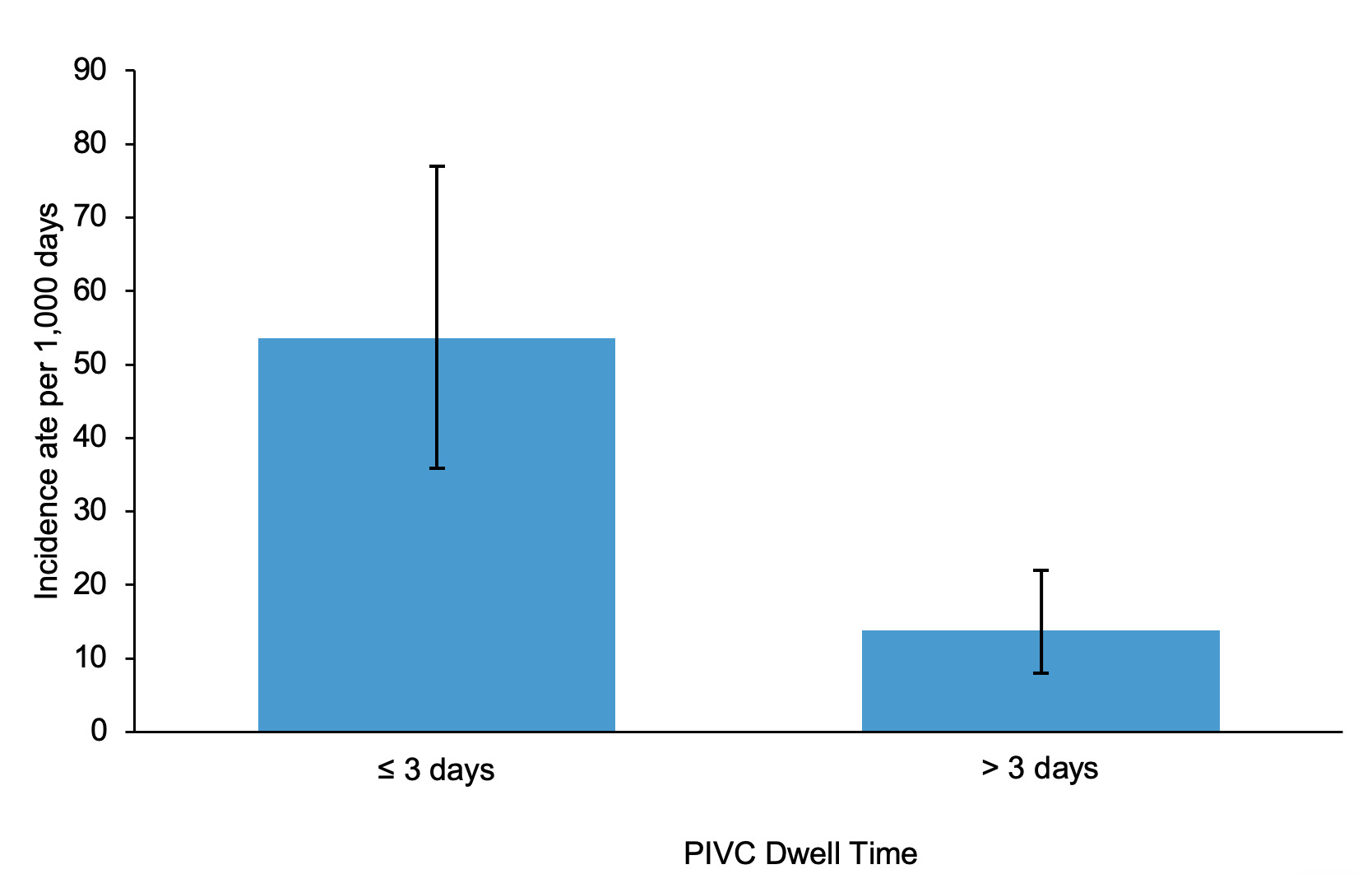
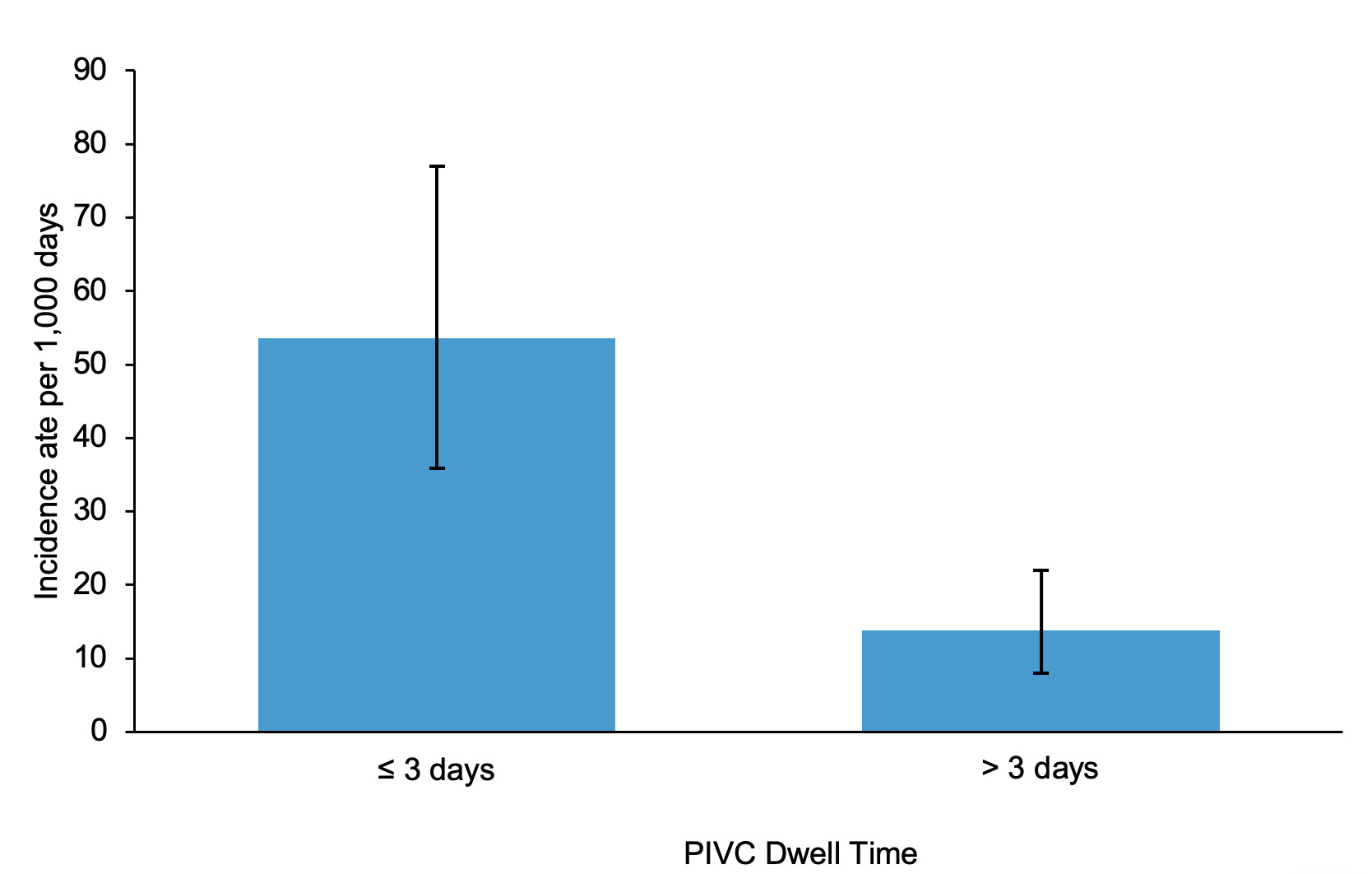
Among failed PIVCs, those with extended dwell (>3 days) had significantly lower failure incidence than those replaced within ≤3 days (IRR 0.26, 95% CI 0.13–0.48, p<0.001) (Figure 3). Treatment duration >7 days demonstrated a non-significant trend toward lower failure incidence compared with ≤7 days (IRR 0.58, 95% CI 0.30–1.05, p=0.08).
Discussion
Summary of Main Findings
In this first multicentre prospective study to evaluate short-term continuous antibiotic infusion via PIVC in Australian HITH services, we observed a 9.98% device failure rate, markedly lower than previously reported general PIVC failure rates of 36-69%, with no PIVC-related infections and high patient satisfaction. Patient comorbidity was the strongest independent predictor of PIVC failure. Clinically indicated PIVC replacement guided by VIP score assessment appears safe.
Safety and Efficacy of PIVCs in HITH
Our data shows that PIVCs used for continuous antibiotic infusion in HITH have a 9.98% failure rate, which is substantially lower than national17 and meta-analytic18 estimates for general PIVC use. Phlebitis occurred at 6.19 per 1,000 catheter days,18 over sixfold lower than previously reported. Dislodgement, pain and local infection rates were notably lower than published PIVC complication rates.18 Importantly, all PIVC failures were clinically minor and self-limiting, requiring only device replacement without further intervention. These findings suggest that the HITH setting, characterised by specialised nursing, with daily VIP score monitoring and informed patients, may represent a lower-risk setting for PIVC complications.
Compared to PICCs, our thrombus rate for PIVCs (0.56 per 1,000 catheter-days) was comparable (PICCs: 0.54 per 1,000 catheter-days), but minor complications exceeded those in PICC literature (dislodgement 0.68, phlebitis 1.11, pain 1.48, leakage 0.36 per 1,000 catheter-days).25 However, in comparison to a Michigan multicentre Outpatient Antimicrobial Therapy (OPAT) study,26 where midlines and PICCs in situ for < 14 days of antibiotic therapy demonstrated major complication plus failure rates of 12% and 22% respectively, our 9.98% overall PIVC failure rate is favourable. Several factors may explain these differences. Paje et al. evaluated longer, more invasive devices (midlines and PICCs); may have included other known irritant antibiotics such as flucloxacillin, despite excluding vancomycin; and was conducted in a US outpatient setting with different nursing and vascular access practices than Australian admitted HITH services. This favourable difference, combined with ease of insertion, reduced invasiveness and lower cost, makes PIVC use for short-duration therapy in HITH a viable alternative.10,27
Patient Satisfaction
Patient satisfaction was high (mean 9.6/10), exceeding typical reports for general PIVC use, and comparable to PICC satisfaction rates.10 Notably, satisfaction remained high even among patients who experienced PIVC failure, suggesting the benefits of home-based care (e.g. comfort, convenience, continuity of usual activities), along with responsive HITH nursing support, mitigating the impact of device complications. Short treatment duration (most < 7 days) and low number of PIVCs per admission (typically 1-2) likely contributed to this positive experience.
PIVC Management and Guideline Alignment
The ATG recommend PIVC replacement every 72 hours,16 and ACSQHC standards allow clinically indicated replacement only in services with robust monitoring systems.16,17 In our cohort, PIVCs with dwell times >72 hours had lower failure rates than those removed ≤72 hours, suggesting failures occur predominantly early and that routine time-based replacement may remove well-functioning catheters unnecessarily. The trend toward lower failure among patients treated for >7 days also reflects survivorship bias: catheters prone to fail are removed early, whilst those that survive the initial higher-risk period tend to continue functioning.
Higher final VIP scores were associated with increased odds of removal, underscoring the value of diligent clinical assessment as an early signal of catheter deterioration, supporting clinically indicated rather than arbitrary time-based replacement. These results align with a HITH randomised controlled trial that found no difference between routine 72-96 hour and clinically indicated PIVC replacement.21 Collectively, our data supports clinically indicated PIVC replacement as a preferable approach to routine PIVC replacement every 3 days in the HITH context.
Patient Risk and Independent Predictors of Failure
CCI was the only independent predictor of PIVC failure, indicating patient comorbidity is a stronger determinant of PIVC survival than insertion or device characteristics. This highlights an opportunity in HITH, to target patients with higher CCI for closer monitoring or non-PIVC venous access.
Several factors were strongly predictive in univariate analysis, namely, forearm insertion site, IVAT nurse inserters and longer catheters, but lost statistical significance in the multivariable analysis. This likely reflects confounding and collinearity; for example, more experienced inserters may preferentially choose optimal sites and longer catheters for patients with challenging access. Nonetheless, the univariate findings are consistent with previous evidence that increased intravascular catheter length improves stability and reduces dislodgement risk.12,13,28
Strengths and limitations
Key strengths include the multicentre, prospective study design, robust sample size and collection of both clinical and patient-reported outcomes. Despite significant variation in recruitment volumes, nursing delivery models and PIVC insertion practices, no significant site-level differences in failure risk were observed in univariate or multivariable analyses, supporting generalisability of the findings across similar Australian HITH services.
Limitations include the observational design, which precludes causal inferences, and potential residual confounding despite multivariable adjustment. Variations in local practice and monitoring protocols across sites may have influenced outcomes. Site-level variability in VIP score interpretation was not formally assessed and may have influenced phlebitis-related removal rates. Some subgroup analyses may be underpowered, and results may not generalise to paediatric populations, more resource-limited HITH services, or substantially different case-mixes.
Future Research
Future research could compare once-daily IV cefazolin plus probenecid with continuous cefazolin infusion, evaluate increased or earlier oral antibiotic use, and investigate the impact of PIVC catheter length, insertion technique and routine ultrasound guidance on complication rates.29,30 Cost-effectiveness analyses would help guide best-practice recommendations. Patient or carer self-administration of IV antibiotics has shown safety and efficacy internationally and warrants future evaluation in Australian HITH. Further studies should also evaluate PIVC outcomes with a broader range of continuously infused antibiotics in the HITH setting.22
Conclusion
Continuous antibiotic infusion via PIVC in HITH, for short durations, is safe and effective, with excellent patient experience. The findings also support clinically indicated PIVC replacement guided by VIP score assessment and reconsideration of guidelines that currently discourage PIVC use for continuous antibiotic infusions in HITH.
Acknowledgements
Joseph S, Bankstown-Lidcombe Hospital; Al Araimi I, Andrews L, Aust T, Senanayake S, Thomas J, The Canberra Hospital; Kidd M, Nagarkar S, Prince H, Rockhampton Hospital; Harker L, West V, Townsville University Hospital and Hospital in Your Home; Webb E, Rocco J, Neeman T, Australian National University; Shaw J, ACT Health.
Funding Statement
There are no financial conflicts of interest with no external funding utilised for purposes of this study
Data Sharing Statement
The study data can be accessed by contacting the corresponding author and all authors had full access to all the data (including statistical reports and tables) related to the study
Conflict of Interest Statement
There are no financial conflicts of interest with no external funding utilised for purposes of this study. Dr Karyn Cuthbert is a board member of the HITH Society Australasia
Author contributions
Karyn Cuthbert B Med, FACEM, karyn.cuthbert@act.gov.au. Hospital in the Home, Canberra Hospital; School of Medicine and Psychology, Australian National University. ORCID iD: https://orcid.org/0009-0008-5470-6910
Roles: Conceptualization (Lead), Investigation (Equal), Methodology (Equal), Project administration (Lead), Supervision (Lead), Validation (Supporting), Writing – review & editing (Lead), Resources (Equal).
Barbara Lee BMedSci (hon), PhD, barbara.lee@anu.edu.au. School of Medicine and Psychology, Australian National University. ORCID iD: https://orcid.org/0000-0001-9665-660X
Roles: Conceptualization (Supporting), Data curation (Supporting), Formal Analysis (Supporting), Investigation (Equal), Methodology (Equal), Validation (Supporting), Writing – original draft (Lead), Visualization (Equal), Project administration (Supporting), Resources (Equal), Software (Supporting)
Vincent Ngian MBBS, FRACP, vincent.ngian@health.nsw.gov.au
Ambulatory Care/Hospital in the Home, Bankstown-Lidcombe Hospital
Faculty of Medicine and Health, University of NSW (UNSW) Sydney
Roles: Conceptualization (Supporting), Data curation (Lead), Formal Analysis (Lead), Investigation (Equal), Methodology (Equal), Validation (Lead), Writing – review & editing (Supporting), Visualization (Equal), Software (Lead), Supervision (Supporting), Resources (Equal)
Bin Ong MBBS, FRACP, bin.ong@health.nsw.gov.au
Ambulatory Care/Hospital in the Home, Bankstown-Lidcombe Hospital
Faculty of Medicine and Health, UNSW Sydney
Roles: Conceptualization (Supporting), Formal Analysis (Supporting), Investigation (Equal), Methodology (Equal), Validation (Supporting), Writing – review & editing (Supporting), Project administration (Supporting), Resources (Supporting), Supervision (Supporting)