
Key Points
Question
Does the solution concentration of piperacillin/tazobactam affect the rate of infusion from elastomeric devices (EMPs)?
Findings
The higher solution concentration of piperacillin/tazobactam 75mg/mL (in 0.9% NaCl) had a statistically and clinically significant effect of slowing the rate of infusion from EMPs in a clinical HITH setting, compared to the piperacillin/tazobactam solution concentrations of 56.25mg/mL (in 0.9% NaCl) and 37.5mg/mL (in 0.9% NaCl).
Meaning
HITH health clinicians should carefully consider whether using solution concentrations of piperacillin/tazobactam 75mg/mL in EMPs in the clinical HITH setting is appropriate.
INTRODUCTION
Portable elastomeric infusion pumps (‘EMPs’) are commonly used to administer 24-hour continuous intravenous antibiotic infusions in Hospital in the Home (‘HITH’) programs. This practice is cost-effective, preferred by patients, and allows for a once-daily nursing visit.1,2
EMP flow rates may be affected by changes in temperature,3 varying storage heights,3,4 solution viscosity,3,5,6 antibiotic concentration or solution type,5–7 and venous back pressure.4 Recent laboratory studies have questioned the flow rate accuracy of EMPs when filled with antibiotics, glucose solutions, water or sodium chloride solutions.3–6 However, few clinical practice studies have examined the extent to which EMP flow rates are affected by antibiotic solution concentration in real-world HITH settings. The few studies reviewing antibiotic solution concentration (which may affect solution viscosity) on EMP flow rate have been either conducted in the laboratory setting,5,6 or conducted in the clinical setting using multiple antibiotics so that direct comparisons between varying solution concentrations of a single antibiotic is limited.7
Without an electronic or battery source to power the infusion, the EMP relies on an opposing force applied by a small flow restrictor located inside the intravenous tubing, counteracting the force applied by the antibiotic solution-filled deflating elastomeric balloon. When the tube containing the flow restrictor is taped to the skin and exposed to skin temperature, the EMPs are designed to run at their stated rate with a deviation of +/- 15%.8
Piperacillin/tazobactam is commonly prescribed in three different doses (9g, 13.5g or 18g as a continuous intravenous infusion over 24 hours) to treat serious infections such as malignant otitis externa, diabetic foot infections, and respiratory infections including infective exacerbations of bronchiectasis or cystic fibrosis9 in the HITH setting. Depending on the type of infection, the patient’s renal function, and the EMP volume currently available (240mL), three solution concentrations are commonly prescribed: piperacillin/tazobactam 37.5mg/mL (piperacillin/tazobactam 9g in 240mL of 0.9% NaCl), piperacillin/tazobactam 56.25mg/mL (piperacillin/tazobactam 13.5g in 240mL of 0.9% NaCl), or piperacillin/tazobactam 75mg/mL (piperacillin/tazobactam 18g in 240mL of 0.9% NaCl), which are delivered over 24 hours.
Aim
This study aimed to evaluate the effect of piperacillin/tazobactam solution concentration on the rate of infusion from EMPs in the clinical ‘real-world’ setting, by reviewing and comparing the proportion of solution administered, and the volume of residual solution, from three different EMPs containing piperacillin/tazobactam solution concentrations of 37.5mg/mL, 56.25mg/mL and 75mg/mL. A secondary aim was to review the frequency of piperacillin/tazobactam EMPs performing outside the expected infusion rate of 10mL/hour +/- 15%.
METHOD
This retrospective audit focused on the ‘Central Coast Health at Home’ HITH service (‘CCH@H’) for the Central Coast Local Health District (CCLHD) NSW, Australia, between 6/11/2021 and 14/6/2023, to achieve a sample size of at least 131 patients.
Study Setting
At the time the study was completed, the CCH@H service serviced 40 ‘beds’ (patients) across a geographical area of approximately 1681sqkm10 for a population of approximately 350,000.11 In the 2021/2022 financial year, the CCH@H service treated approximately 780 patients who had an average length of stay of 9.4 days. The Central Coast of NSW is a temperate coastal region of Australia with average maximum inland coastal temperatures in summer ranging from 26-28oC, and average minimum temperatures of 6-8oC in winter.12
EMPs were delivered from a pharmaceutical manufacturing company (Slade Health) in controlled refrigerated conditions to the CCLHD pharmacy department before being dispensed by the CCH@H Pharmacist on receipt of a valid prescription from the CCH@H doctor. CCH@H patients treated with EMPs received daily visits by CCH@H nurses, who transported the EMP from the hospital to the patient’s house in a cooler, changed the EMP and clinically monitored the patient. Patients were clinically reviewed by the CCH@H medical officer at least once per week in the CCH@H hospital clinic, or virtually via telehealth. CCH@H medical officers ordered and reviewed patient pathology and liaised with CCLHD infectious disease specialists and the CCH@H Pharmacist when required. CCH@H Pharmacists were responsible for reviewing patients prior to acceptance on the CCH@H service, clinical review of patient’s pathology while at home, reviewing patient’s current medications for potential medication interactions, ongoing ordering of EMPs, daily attendance at multidisciplinary rounds, and liaising with ward pharmacists, ward medical officers, infectious disease specialists, and antimicrobial stewardship pharmacists where appropriate. CCH@H Patients did not self-administer the EMPs.
Nurses routinely recorded the time the EMP was attached and detached in the patient medical notes during the home visit and taped the flow restrictor portion of tubing directly to the patient’s skin, as per routine clinical practice.
Study Design
All patients in the CCH@H service treated with any of the three available solution concentrations of piperacillin/tazobactam 37.5mg/mL (9g/240mL), 56.25mg/mL (13.5g/240mL) or 75mg/mL (18g/240mL) EMPs, were included in the study.
Patient medical records were reviewed retrospectively and the following information was recorded: patient identifying number, age/sex, treatment indication, piperacillin/tazobactam solution concentration, time of EMP attachment and detachment, volume of residual antibiotic solution (if any), EMP type/brand, central line type, and central line issues (if any, such as line placement, difficulty flushing, or other line issues).
Where the time of EMP detachment was not recorded, 10 minutes prior to the next EMP attach time (if recorded) was used. This was derived from calculating an average time difference between attach and detach times where both times were recorded, which was consistent with observed current practice. This also allowed for standardisation in the absence of exact data. If no attach or detach time was recorded, this was documented as ‘not recorded’ and not included in the data analysis. For the MobiFUSER®, nurses estimated the residual volume by lining up the volume indicator (a black line at the top of the elastomeric balloon reservoir) against 50mL increments marked on the plastic outer casing of the EMP, ranging from 0-250mL. For the Surefuser+®, the nurses estimated the residual volume by reading the blue progression line compared to 50mL increments marked on the plastic outer casing (with 25mL half-way increments also marked). For the Baxter Infusor® EMPs, the residual volume was estimated comparing the base of the elastomeric balloon to the infusion progression lines marked on the plastic outer casing. The nurse recorded the residual volume in the patient’s medical notes. If an unclear volume using ‘less than’ (or ‘<’) was recorded by the nurse, 50% of the volume was recorded. For example, a volume of ‘<50mL’ was recorded as ‘25mL’. If patients were readmitted and treated again during the period of data collection, each readmission was treated as a separate observational unit for analysis.
Most patients were treated with the MobiFUSER®, however on occasion, patients were transferred from other hospitals on other brands of EMPs (such as Surefuser+® and Baxter Infusor®), and these patients were included in the study. MobiFUSER®, Surefuser+® and Baxter Infusor® brands all contained hard outer shells surrounding an antibiotic-filled elastomeric balloon connected to tubing with flow restrictors.
All EMPs administered a solution at 10mL/hour over 24 hours and were filled with piperacillin/tazobactam 37.5mg/mL, 56.25mg or 75mg/mL in 0.9% NaCl 240mL.
Residual volumes were reviewed over various times which were defined as: ‘all times’ to reflect current clinical practice (where nurses may visit early or late due to travel constraints over large distances); ‘≥24 hours’ to review the accuracy of the EMP (which should be empty by 24 hours); and ‘=24 hours’ (≥24-<25 hours) to review the accuracy of the EMP without the potential bias of extra time allowing further administration of solution at >25 hours. To review the generally accepted variation of EMP flow rate/residual volume (+/-15%) as stated by the International Organization for Standardization for non-electrically driven portable infusion devices,10 the frequency of residual volumes >36mL (+15%) was also reviewed, where 36mL represents 15% of the initial 240mL solution volume left in the EMP.
Ethics Approval
Ethical approval was granted by Central Coast Local Health District Research Office (Reference no: RE: 0421-041C) as a HREC Exempt Low/ Negligible Risk (LNR) Research.
Statistical Analysis
As data within patients was clustered, the study’s sample size was calculated using methods described by Ahn et al. (2011).13 Setting the level of significance at 5% and power at 80%, it was determined that a sample size of 131 patients was required to detect a difference in proportions of 0.10, assuming an intracluster correlation of 0.40. We assumed an intracluster correlation coefficient (ICC) of 0.40, corresponding to the lowest ICC reported by Li et al. (2019)14 in a study of daily measurements, to conservatively reflect the correlation expected from repeated daily observations within patients. Statistical analyses were conducted using Stata (Version 18, StataCorp, College Station, TX, USA). Descriptive statistics such as median and interquartile range (IQR) were used for continuous variables, and frequency counts and percentages for categorical variables. Box plots were used to describe the distribution of EMP residuals for each EMP dose/concentration over time. For the purpose of an exploratory analysis, univariable logistic regression was used to assess the association between antibiotic solution concentration and the likelihood of the EMP having ≤15% of residual solution when removed ≥24 hours, as well as the likelihood of EMP having ≤15% of residual solution for each antibiotic solution concentration. Due to the normal distribution for this group, a univariable linear regression was performed to assess the effect of piperacillin/tazobactam EMP solution concentration on the mean percentage volume of antibiotic solution administered at the time of removal. Pairwise comparisons between antibiotic solution concentrations were performed using the post-estimation Stata command (i.e. lincom), providing estimated mean differences with 95% confidence intervals for linear modelling and odds ratios with 95% confidence intervals for logistic modelling.15 For all regression modelling, a cluster-robust variance estimator, vce(cluster), was used to handle correlated data within each patient.
RESULTS
Data was retrospectively collected from 6/11/2021 to 14/6/2023 from 134 patient admissions and 2342 periods of EMP treatment days. Patient characteristics, indications, EMP solution concentrations, EMP attach times and central line types are outlined in Table 1.
Of the 134 patients, 124 patients were reviewed on one HITH admission, 9 patients were reviewed on two separate HITH admissions, and one patient was reviewed on 3 separate HITH admissions.
Nurses recorded central line issues on 12 occasions in 6 patients and recorded no line issues (e.g. flushing well/ ‘flashback observed’) on 2324 treatment days. On 6 occasions the line function was not recorded. Peripherally Inserted Catheters in use (3 or 4 French) were within the recommended size for use with EMPs.
MobiFUSERS® were used on 131 patients on 2323 days. Baxter Infusors® were used on 7 days in one patient (piperacillin 18g: 5 Infusors® with residual volumes ranging from 10-70mL). Surefuser+® were used on 12 days for 2 patients (piperacillin 13.5g: on 8 days, 8 EMPs had residual volumes ranging from 50-240mL; piperacillin/tazobactam 18g: on 4 days, 4 EMPs had residual volumes of 120mL).
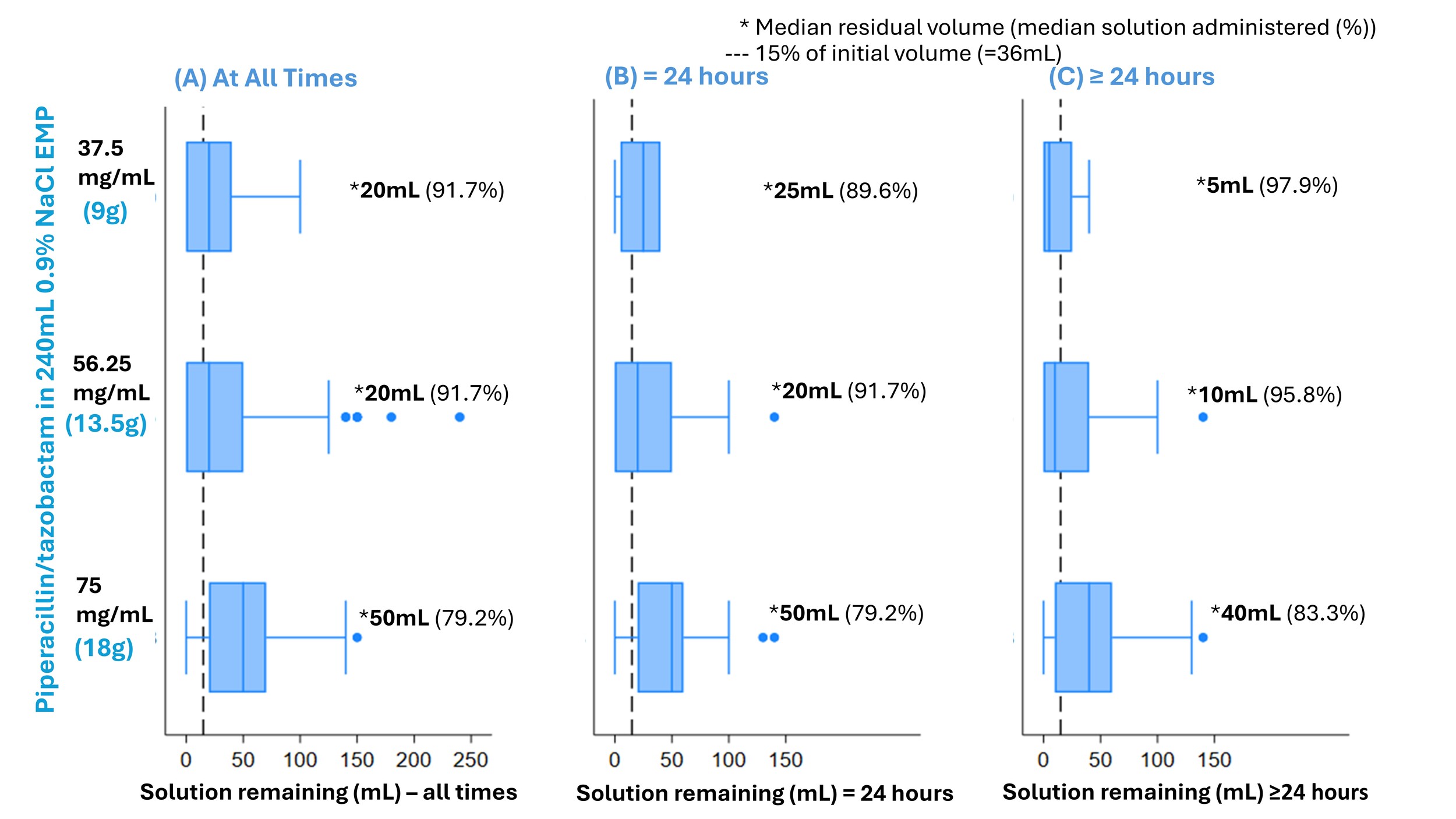
The median residual volume was 30mL (IQR: 0-50mL), 30mL (IQR: 0-50mL) and 25mL (IQR: 0-50mL) for all EMPs when removed: at ‘all times’, at ‘=24 hours’ and ‘≥24 hours’ respectively. Further details outlining the distribution of residual volumes, median residual volumes, and median percentage solution administered over various infusion times for each EMP solution concentration is outlined in Figure 1.
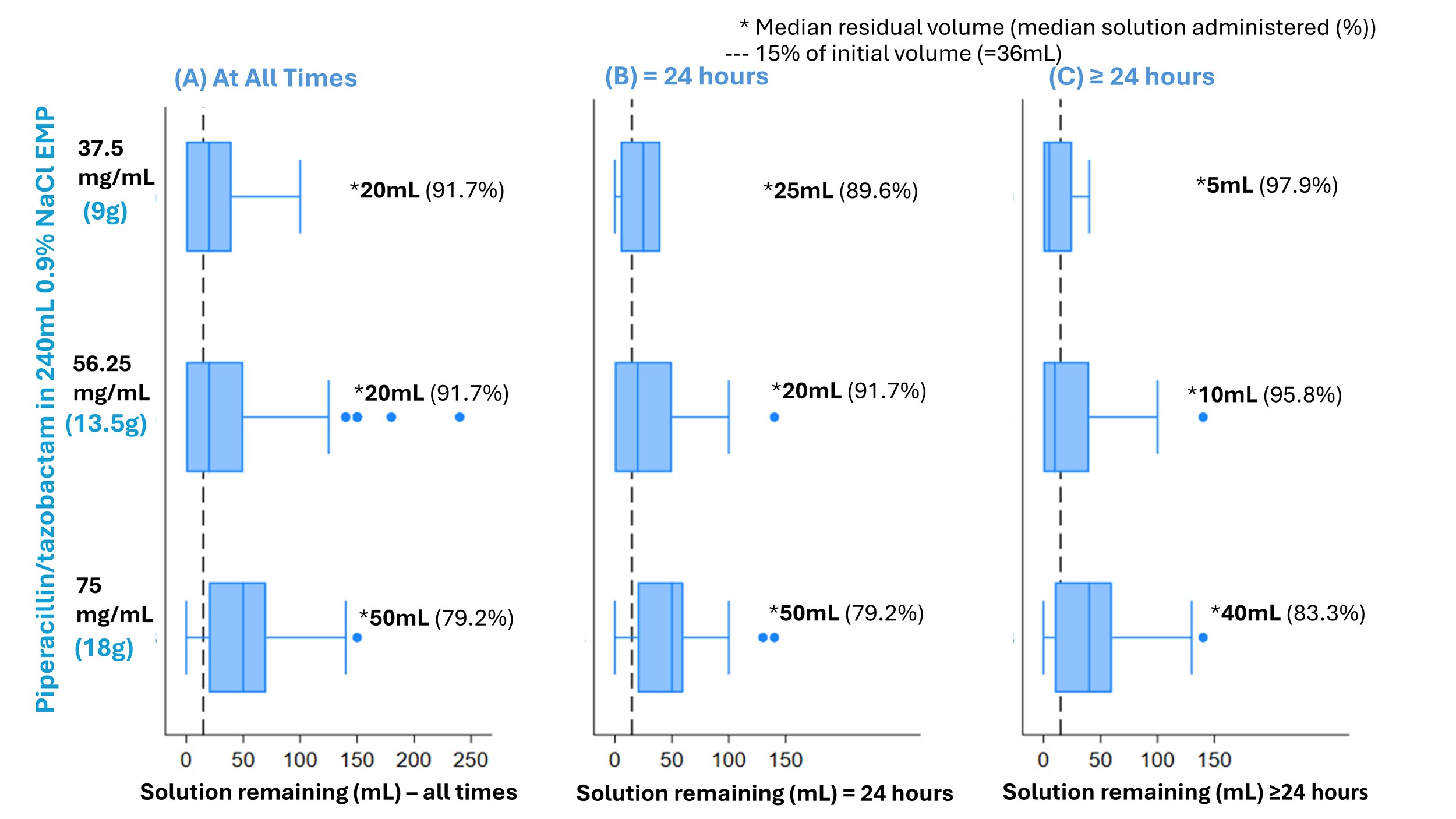
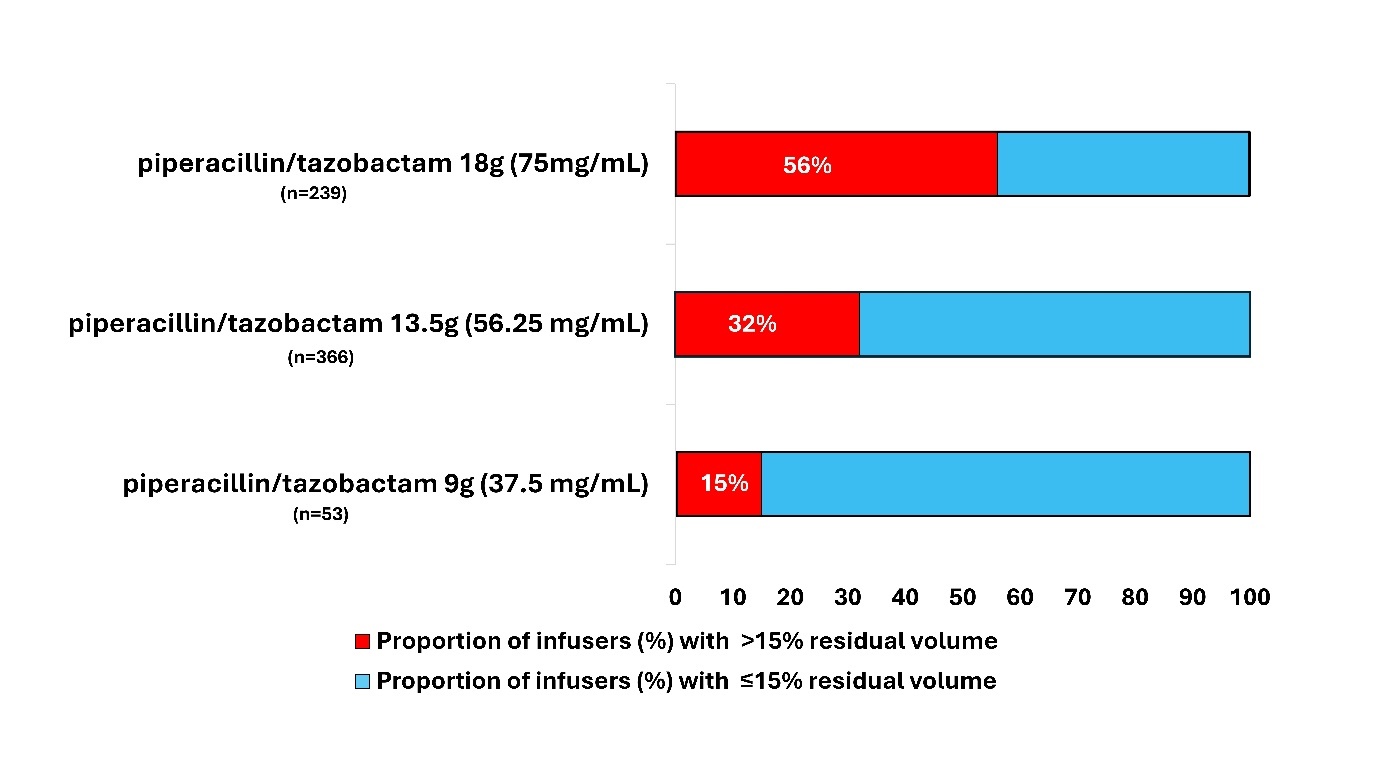
The residual volume was recorded by a nurse on 2152, 325 and 658 occasions (and not recorded by a nurse on 190, 19 and 41 occasions) when the EMP was removed ‘at all times’, ‘=24 hours’ and ‘≥24 hours’ respectively. On occasion, the residual volume was recorded, but the time the EMP was attached was not recorded (n=574), and therefore could not be included in the analysis. MPs with residual volumes >15% (>36mL) occurred: 46% at ‘all times’ (n=997/2152); 48% ‘=24 hours’ (≥24-25) (n=155/325); and 40% ‘≥24 hours’ (n=260/658). EMPs with residual volumes >15% for each piperacillin/tazobactam solution concentration, when the EMP was detached ≥24 hours are outlined in Figure 2.
_of_emps_removed_with___15__residual_volume_for_each_emp_solution_concentrati.jpeg)
Effect of Piperacillin/Tazobactam EMP Solution Concentration: Residual Volume ≤15% Piperacillin/tazobactam When Detached ≥24 Hours
A logistic regression was performed to ascertain the effects of piperacillin/tazobactam EMP solution concentration (37.5mg/mL vs 56.25mg/mL vs 75mg/mL) on the likelihood that EMPs would have a residual volume ≤15% (≤36mL) vs >15% when the EMP was removed ≥24 hours. The piperacillin/tazobactam 75mg/mL EMP was significantly less likely to be removed with a residual volume ≤15% (≤36mL) vs >15% compared to the piperacillin/tazobactam 37.5mg/mL or 56.25mg/mL EMP as outlined in Table 2.
Probability of Residual Volume ≤15% Piperacillin/Tazobactam EMP ≥24 Hours
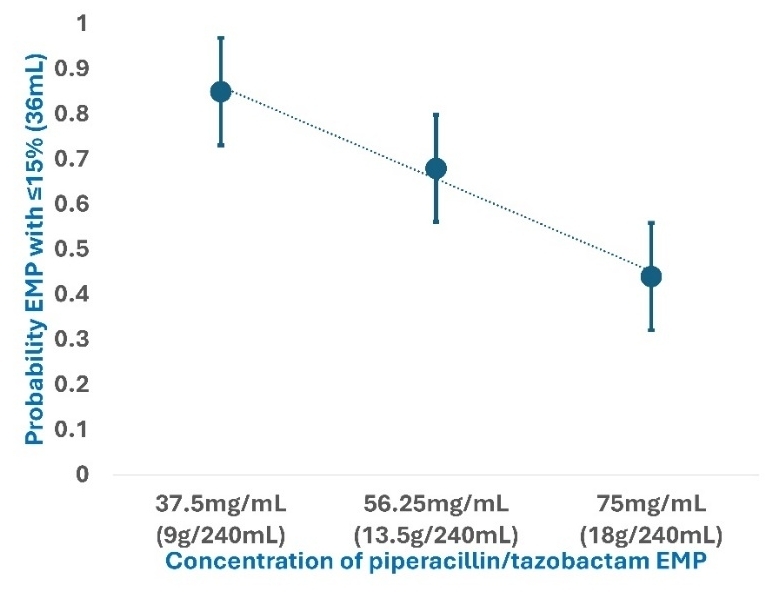
The piperacillin/tazobactam 75mg/mL EMP was more likely to have residual volumes >15% than residual volumes ≤15% when it was detached at times ≥24 hours. The piperacillin/tazobactam 37.5mg/mL and 56.25mg/mL EMPs were more likely to have residual volumes ≤15% than >15% when detached at times ≥24 hours, as outlined in figure 3.
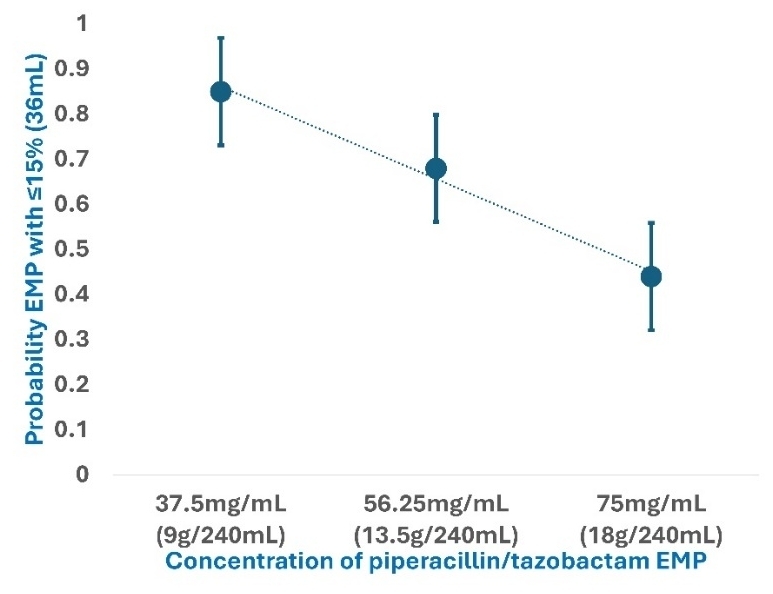
Effect of Piperacillin/Tazobactam EMP Solution Concentration: Difference in Mean Percentage of Solution Administered at the Time of EMP Removal
The mean piperacillin/tazobactam solution administered at the time the EMP was detached was calculated for all piperacillin/tazobactam solution concentrations, over all times. For example, if an EMP was removed at 20 hours, with 50mL of residual solution, this was documented as 95% solution administered (190mL of antibiotic solution was administered over 20 hours, divided by the expected 200mL that should have been administered over 20 hours if the EMP was running at exactly 10mL/hour).
The mean percentage of solution administered was 93.0% (95% CI [88.1, 97.9]) for all piperacillin/tazobactam 37.5mg/mL (9g/240mL) EMPs (n=170), 90.8% (95% CI [88.5, 93.1]) for all piperacillin/tazobactam 56.25mg/mL (13.5g/240mL) EMPs (n=1247) and 83.3% (95% CI [79.8, 86.8]) for all piperacillin/tazobactam 75mg/mL (18g/240mL) EMPs (n=735). Linear regression was used to estimate differences in mean percentage solution administered at the time of EMP removal, between the piperacillin/tazobactam EMP solution concentrations, as outlined in Table 3.
DISCUSSION
Piperacillin/tazobactam is commonly used to treat serious infections in the HITH setting, and therefore it is important for adequate antibiotic doses to be consistently administered from reliable ambulatory intravenous pumps such as EMPs. As outlined in the HITH NSW Health Policy Directive, patients should receive a similar quality of care in HITH programs as in the inpatient setting.16
To our knowledge, this is the first study to systematically evaluate the effect of different piperacillin/tazobactam solution concentrations on the infusion rate from EMPs in the clinical HITH setting over an extended timeframe and in large numbers. This study demonstrated that the higher concentration of piperacillin/tazobactam 75mg/mL resulted in significantly higher residual volumes indicating a slowed infusion rate compared to the lower solution concentrations of piperacillin/tazobactam 56.25mg/mL and 37.5mg/mL.
EMP Residuals
Observing slow-emptying EMPs in the clinical setting should be expected, considering that EMP manufacturing companies use NaCl 0.9%17 and glucose 5%18 to calibrate their EMPs and not the antibiotic solutions used in clinical practice. A variance of +/-15% is generally accepted for EMP flow rates,8 however this study showed that overall, 40% of EMPs had residual solutions that were >15% (>36 mL) of the starting volume when removed at times ≥24 hours, which is much higher than expected, and outside these current recommendations.
Piperacillin/tazobactam 75mg/mL EMPs were removed with residual volumes >15% over half the time (56%) when detached ≥24 hours, and the median residual volume was substantial (50mL) when it was removed at ‘all times’ and ‘=24 hours’. Consequently, less than 79.2% of the solution was administered to the patient 50% of the time, resulting in patients commonly receiving 14.25g or less than the prescribed 18g daily dose. Such a reduction in dose could be clinically significant and could potentially adversely affect patient outcomes. This is concerning, since most clinicians would expect EMPs to empty most of the time, and if not, the residual volume would fall within the expected parameters of +/-15%.
Effect of Piperacillin/Tazobactam EMP Solution Concentration on the Likelihood of Residual Volume ≤15% and Mean Percentage Solution Administered
When attached for at least 24 hours, piperacillin/tazobactam 75mg/mL EMPs were significantly less likely (with a predicted probability of only 44%) to be removed with a residual volume ≤15% compared to the piperacillin/tazobactam 37.5mg/mL or 56.25mg/mL EMPs (with predicted probabilities of 85% and 68% respectively), showing that the higher solution concentration had a considerable impact on slowing the rate of the EMP. Piperacillin/tazobactam 75mg/mL EMPs also had a statistically and clinically significant reduction in the mean percentage of antibiotic solution administered to the patient compared to the piperacillin/tazobactam 37.5mg/mL and 56.25mg/mL EMPs.
No statistically significant difference was observed between the piperacillin/tazobactam 37.5mg/mL and 56.25mg/mL EMP solution concentrations with regards to residual volume >15% or the volume of solution administered to the patient. However, both the piperacillin/tazobactam 37.5mg/mL and 56.25mg/mL EMPs should still be used with caution, since for 50% of the time, patients treated with piperacillin/tazobactam 37.5mg/mL and 56.25mg/mL EMPs received only 89.6% or 91.7% of the solution or less respectively, when detached ‘=24 hours’, and the piperacillin/tazobactam 56.25mg/mL EMP had >15% residual volumes for 32% of the time when detached ≥24 hours.
Limitations of the Study
Limitations to the study included: possible differences in nursing interpretation of the estimated remaining EMP volume, the estimation of EMP removal time when it was not recorded, and unreviewed factors such as temperature and storage in the home/community setting (which may also impact EMP flow rate). Analyses were also restricted to univariable logistic and linear regressions, which did not allow adjustment for potential confounders. However, EMPs are commonly detached close to the time the next EMP is attached, the data was collected over multiple seasons to account for data collection in a variety of seasons/temperatures/storage scenarios, and all elastomeric EMPs have a similar function, albeit the majority of EMPs (131/134) were MobiFUSER®, similar results should be expected from other brands of EMPs. While appropriate to the scope of this study, future research with more comprehensive covariate data could apply multivariable models to provide greater adjustment for potential confounders.
Further Research
Further research should concentrate on measuring plasma drug concentrations to review whether MIC targets are reached from partially emptied EMPs, and if other high-antibiotic solution concentrations administered by EMPs have a similar effect on EMP infusion rates (such as flucloxacillin 12g/240mL and benzylpenicillin 14.4g/240mL) in the clinical HITH setting. Reviewing the impact of partially emptied EMPs on patient outcomes would also be beneficial.
Research comparing the use of alternate ambulatory infusion pumps such as battery-operated pumps to administer piperacillin/tazobactam solutions and other antibiotic solutions in the HITH setting would be welcomed.
CONCLUSION
Increasing the concentrations of piperacillin/tazobactam solutions in EMPs can slow the infusion rate, with the higher piperacillin/tazobactam solution concentration 75mg/mL causing a significant reduction in the dose of antibiotic delivered.
The use of piperacillin/tazobactam 75mg/mL (18g/240mL) in an EMP in the clinical setting should be carefully considered, and clinicians should also be aware that piperacillin/tazobactam 37.5mg/mL and 56.25mg/mL EMPs may also empty more slowly than expected.
EMP manufacturing companies should consider calibrating their EMPs with the antibiotic solutions used in clinical practice, and offering larger volume EMPs for larger antibiotic doses requiring more concentrated solutions, such as the piperacillin/tazobactam 75mg/mL solution (18g/240mL) reviewed in this study.
Acknowledgements
The authors wish to thank Rachelle Highton (CCH@H Nursing Unit Manager) and Helen Watson (CCH@H Administration Officer) for their assistance relating to CCH@H service data, and all the CCH@H nursing staff for their ongoing diligence documenting data relating to EMP residuals.
Funding Statement
This research forms part of TD’s PhD. TD received a tuition fee scholarship under the Government Research Training Program (RTP) which offsets fees for HDR programs.
The authors declare no other financial support was received for this work.
Data Sharing Statement
The Study data can be accessed by contacting the corresponding author.
Conflicts of Interest
JS has received personal payment for royalties from Oxford University Press for work on The Syringe Driver, unrelated to this research and payment from BD for participation in Delphi Panel reviewing literature on drug compatibility with IV bags. MD holds voluntary membership of the Data and Safety Monitoring Committee (DSMC) and is an investigator of DSMC Preventing InfusAte injuries: throughout a child’s hospitalisation (PATCH): a type 1 hybrid randomised controlled trial. TD has received personal payment for reviewing the latest edition of Therapeutic Guidelines, Antibiotic, as part of the Drug Information Expert Group.
The remaining author(s) declared no potential conflicts of interest with respect to the research, authorship, and/or publication of this article.
Author Contributions
Conceptualization: TD, MD, JS, MR
Data curation: TD, MD
Formal analysis: MD, TD, JS, JC, MR, EW, CP, JP, MV
Funding acquisition: NA
Investigation: TD
Methodology: TD, JS, JC, MD, MR
Project administration: TD
Resources: TD
Software: TD
Supervision: JS, JC
Validation: TD,
Visualization: TD
Writing – original draft: TD
Writing – review and editing: TD, JS, JC, MD, MR, EW, CP, JP, MV
Corresponding Author
Toni Docherty* BPharm, GradDipCommPharm, PhD Candidate School of Medicine and Public Health, University of Newcastle, University Drive
Callaghan NSW 2308, Australia, toni.docherty@health.nsw.gov.au, toni.docherty@uon.edu.au